Thursday, February 02, 2006

My Daddy Can Beat Up Your Daddy

What is the measure of a god? Perhaps I'm partly motivated by the recent StarGate theme in which evil beings with god-like powers are attempting to destroy our galaxy (which is protected by benevolent if strange beings with god-like powers). I've also been reading sections of the Bible where it talks about God working for his glory.

It's strange. I don't quite know why, but I think our society doesn't view deities as very different. The Jewish Yahweh? Allah? Jesus? Goddess? Buddha? What is really the difference between them anyway?

Are some gods better than others? Does what religion you are matter? And how would one evaluate deities anyway? Give them a multiple answer test? "If I were your loyal follower, would you (a) reward me with wealth and riches and power, (b) randomly smite me with lightening, (c) ignore me, (d) other -- please specify....?"

Since I tend to lean on the opinion that all religions are not equal (created, evolved, or otherwise), I'm curious in the distinctions. Where is my deity's power seen in my life? And where is it not seen in the lives of other, non-followers?

In some ways, I like the Old Testament where the non-Jews say something like "Let us go and fight them [the Jews] in plains, because the Jewish god is a god of the mountains, not of the plains." Then the two groups fight in the plains, the Jews win, and we see that Yahweh is more powerful than the other God. Hrm, maybe the playoffs could be like that. Each team chooses to represent a deity, and the nation converts for a year to the religion of the team winning the Superbowl.

Maybe part of the problem is that Americans frequently use "God" a generic sense rather than giving a name for God. Perhaps if we forced people to use a more explicit description of their god, the differences would be clearer. For example
"I believe in 'He-who-is-nice-and-keeps-my-life-from-having-any-problems'" Sam
Then we could judge whether or not Sam's deity was powerful and trustworthy by whether or not Sam had any major problems in his life.
or
"I believe in 'He-who-wants-me-to-be-a-millionaire-within-5-years-if-I-give-30%-of-my-income-to-the-church'" Tom
Then we could judge whether or not Tom's deity was powerful and trustworthy by whether or not Tom was a millionaire within 5 years along with stealing a peek at his financial records. Better yet, survey all of Tom's fellow believers and make sure Tom is not a statistical anomaly - or attending a church comprised of billionaires' sons and daughters.

(And yes, I know I haven't been blogging enough. I blame the evil corporations that disconnected my internet.)

Sunday, January 29, 2006

Age

On my trip over Christmas, I got to talking with a few different people on the plane. And I reached a conclusion: Old people are hard to talk to because they've experienced so much tragedy. During my trip, conversations included breast cancer, unwanted moving trips, son dying from epilepsy, and family separations...in about 4 hours of conversation.

I suppose it highlights that much of life happens to us - and we're simply forced to make choices that deal with the tragedy. And for most of us, tragedy will be part of our lives. I just don't like how conversation with older strangers so easily crosses into pain that they may or may not want to talk about. Mostly I don't like it because I don't know how to respond.

Also, a significant amount of tragedy in people's lives seems to be brought about by their own mistakes. And there is less hope to offer as one gets older: Life is shorter, there are fewer big choices to make. And asking near strangers about their mistakes seems, well, in poor taste.

I suppose this problem will naturally solve itself as I age, but I'd like a faster solution.

Wednesday, January 25, 2006

Cage Rattling

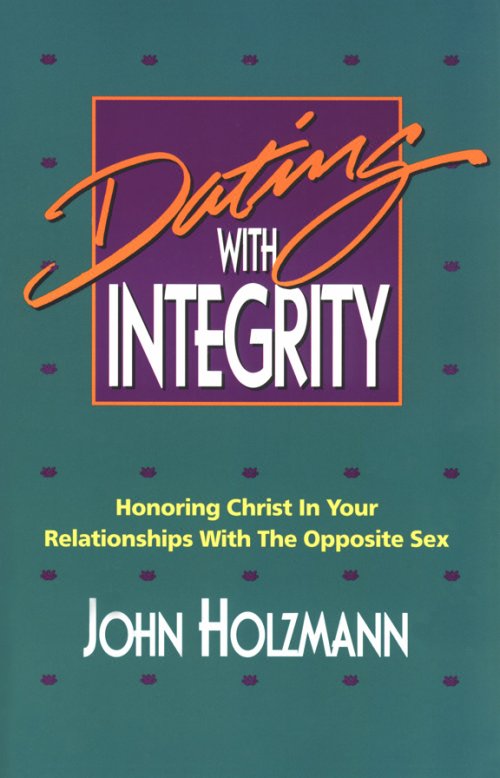
I recently read Christianity Today's excerpt of a new book on dating. I think the title was something about undating. Anyway, I figured it was as good an excuse as any to post my favorite book on courtship/dating. (That's not necessarily high praise, as I'm not a big fan of many of the books.) Besides, people aren't leaving many comments, so I figured I needed a more controversial topic.

The author of Dating With Integrity went to Michigan State, so he can't be all bad. This book is actually one that taught me very little about dating. I'm actually not sure what I think of the author's approach to dating. However, I took away a lot about friendship from this book. John talks extensively about the idea of Christians as family, and what it means to have healthy family relationships.

Holzmann also does a nice study of many scriptural passages regarding topics such as physical contact, sex, favoritism, honor, and integrity. He presents a very straightforward application of the passages. One may not agree with his conclusions (and I think his logic could be tighter), but the book is very good for challenging me about whether my conclusions are derived from scripture and sound principles of understanding what God meant, or whether I'm letting my own wishful thinking be the primary interpreter.

My biggest complaint with the book is that he does not develop model of how people get married very well, and so while I walk away with an excellent idea of what solid healthy non-romantic friendships are intended to be, the romantic-marrying process is a bit muddy.

And yes, I've noted the irony that my favorite dating book deals very little with dating and more with friendship.

Sunday, January 22, 2006

Of Truth and Tact

I've been thinking recently about tact. An acquaintance of mine recently bought a game and I got to help him try it out. The group we played with typically rates games (0-low, 10-high) after playing them. I chickened out and gave it a 7. It wasn't a horrible game, but it wasn't a great game. I just didn't have the heart to rate it any lower after being with him as he bought the game. To be fair, it wasn't a horrible game, and in the right mood, with the right people, I could enjoy myself occasionally. But in retrospect, it was probably only a 6 or 6.5 game. And at the time I was rating it, I was thinking 4 or 5.

On the flipside, I'm reminded of some of my early college writing. I got involved in doing some opinion writing, and some of my editorials were, well, naive, to be kind. One of my friends got a hold of one of the final copies of a particularly idiotic piece of mine (that didn't have my byline), skimmed it, and promptly pronounced it complete garbage - totally clueless that I had written it. I never had the heart to fill him in on his faux pas. (For the record, I'm not totally convinced my friend was wrong in his judgment regarding the quality of work.)

Somewhere between the two situations is the ability to speak truth kindly. It is good that when I tempted to speak strongly against X, I'm reminded that either they or their close friends may be heavily emotionally vested in X. But I suspect that I hedge a bit too much at key points when more directness would be healthier.

Periodically I wonder how often I unconsciously verbally destroy an ideal that is important to someone, and they merely withdraw rather than contest the point. I'm not really sure I want an answer.

[Cartoon from here]

Friday, January 20, 2006

He Who Answers Before Listening...


For the record, let me state that starting a review of my VIBs (very important books) was a bad idea, since it seems to be resulting in my being more attentive to my failings in these areas. Today's book is about listening, for example, and I've spent most of the week noticing ways that I'm really bad at actually listening to others. Sigh. I should pick happier books, like '10 Ways to Appreciate Yourself More.'

Anyway, Listening for Heaven's Sake is a book I picked up about eight years ago, and really stuck with me. I tend to think of it as technical book on the skill of listening. By technical book, I mean it is primarily informational, and thus can be used equally effectively for good or evil.

Mostly the book is a "how to listen to others" book which talks about a lot of practicals. Much of it is common sense, but it's put in a very nice logical and orderly format, which I appreciate. Actually, given how much trouble many people I know have at listening, perhaps it is not so common sense.

(For the curious, the book is done by the same people who did Rational Christian Thinking, which is another set of ideas which has significantly impacted me. I didn't exposed to the ideas in a book, though, so I'm not sure I'll cover it here. Maybe later if people bug me enough. :))

Monday, January 16, 2006

Death of a Vision

Lately I've taken to updating my "theology" library a bit. I'm pretty selective in what books I buy - I generally buy books that either deeply influence my views and behavior or present my own thoughts in an enjoyable way. For various reasons, I have not bought many been a while since I've found many good additions. But recently my church started a list of pastor favorites, so I have been reading through a few of them (it was a bit disheartening how few of their favorites I had read).

(I say "theology" because most of what I consider to be good theology books have immensely practical aspects to them, not dry and boring reflections on surface areas of pins and angels.)

Since I've been reading more recently, I'm also going to take some time and post brief discussions about influential books in my life. After that, maybe I finally write my Yoda post.

And the first book is...not a book. (Okay, so I'm doing books and other influential events.) A long long time ago, I heard a teaching on leadership by some pastor - "Dan". The core idea that I remember I call "Death of a Vision": That God almost always lets a leader's vision fail - horribly - before granting it. That the test of how we handle failure is a vital part of being a successful leader.

I remember Dan walking through the Old Testament and demonstrating leader after leader that faced significant and lengthy deaths of their dreams prior to their major successes. For example:
Abraham - Promised to be a great nation, then spent 25 years waiting for a son, then asked to sacrifice his son.
Joseph - Dreamed of being great, then 13 years in Egypt as a slave, much of it in jail.
Moses - Wanted to free his people, then 40 years in hiding
David - Anointed the future king of Israel, then 10 years on the run from Saul
Paul - Called to be a messenger to the Gentiles, then 14 years in obscurity in Arabia

I dug up my notes on the outline of the talk. Here's a few of the points that haven't stuck with me as clearly, but have definitely impacted my outlook:
Leadership is not based on position: People must choose to follow; they must see God in us. Leadership is first about gaining a vision, being gripped by a call of God. Then occurs the death of a vision because God almost always lets our vision die. Great leaders go through long dry times - think about fears, concerns, etc., etc. - yet God calls them great men.

God does this because he wants to test us - to know our humility, our heart, our motivations. The devil's purpose is to get us to compromise; God's goal is to refine us. Secondly, failure allows us to know, deeply know, that our success is God's work, not our own. If we endure failure, God gives a supernatural fulfillment to our vision. Therefore, do not compromise, do not lower your vision to match your abilities.
I didn't realize until I was rereading my notes from that teaching that was also where the speaker challenged the men to consider being pastors, and where I first started seriously thinking about the idea. (The core comment I remember was something like "If you don't have anything else to aim at, why not aim at being a pastor? If you want to be like Christ, you need tho character aspects of a pastor anyway." But that's probably another blog post.

[Photo: Abraham & Isaac]

Friday, January 13, 2006

Power (Round II)


Everywhere else, throughout society, there are fences, walls, burglar alarms, unlisted numbers, the most elaborate precautions for keeping people at a safe distance. But in marriage all of that is reversed. In marriage the walls are down, and not only do the man and woman live under the same roof, but they sleep under the same covers. Their lives are wide open, and as each studies the life of the other and attempts to make some response to it, there are no set procedures to follow, no formalities to stand on. A man and a woman face each other across the breakfast table, and somehow through a haze of crumbs and curlers and mortage payments they must encounter one another. That is the whole purpose and mandate of marriage. All sorts of other purposes have been dreamed up and millions of excuses invented for avoiding this central and indispensable task. But the fact is that marriage is grounded in nothing else but the pure wild grappling of soul with soul, no holds barred. There is no rulebook for this, no law to invoke, except the law of love.

So while marriage may present the appearance of being a highly structured, formalized, and tradition-bound institution, in fact it is the most free and raw and unpredictable of all human associations. It is the outer space of society, the wild frontier. The Mystery of Marriage by Mike Mason
I did some reading over break, and came across this quote in another book. Something by Chuck Swindoll, I think. I haven't read Mike's book, and I'm not entirely I liked the Swindoll book. It was an interesting read, but I felt like he summarized his understanding of some rather important marriage issues rather than fully explaining himself.

The Mike quote fascinated me. It caught something about the vulnerability of marriage and, to a lesser extent, of friendship in general; how often our lives are primarily defined by attempts to protect ourselves.

I'll restrain myself from offering many thoughts on marriage, but the quote got me thinking about friendship: Friendship does not work well when our goal is to defend ourselves : Defense prevents closeness.. I also don't think friendship works well when we fail to grapple with the serious failings of others : Denial also prevents genuine closeness.

I find that I'm not very good at loving others when I switch to defense - when I view them as the enemy who needs to be kept out. (I should have some witty story to share here to illustrate the point, but none seem appropriate.) But being boldly caring, being willing for our weaknesses to be exposed while speaking insightfully without demeaning isn't a small trick.

(Don't get me wrong, I think healthy boundaries - relational and otherwise - are an important and often overlooked aspect of life. But when the motivation for boundaries is protection, not love, I start to worry. And yes, sometimes love and protection go hand in hand. Very complicated. I'd better get it figured out before I become a professional counselor, eh?)

Thursday, January 12, 2006

Double Standard


I appreciated this article on water on Mars. In a tribute to deductive reasoning, this post is a little different. It even has a photo. (Actually, that idea is stolen from a pastor I know who helping lead a really cool church in Los Angeles.

Read the article and see if you can guess where I am going with this line of reasoning. Here's the key points:
A pair of newly released studies have challenged the theory that a salty sea once lapped the shores of Mars' Meridiani Planum.
Now two new papers based on the same data ... suggest different explanations for the formations, and cast doubt on the idea that conditions there could have been hospitable to any sort of life.
So which of the three theories is correct? Neither McCollum nor Knauth would say that he knows for sure that he's right and the others are wrong, though each believes his theory to be the best.
"Certainly I wouldn't say at this point that they are absolutely wrong," McCollum said.
"This happened three-and-a-half billion years ago. We weren't there when it happened," Knauth said. "So we can't know what happened then, I mean we can't know for sure, and so to speak with certainty would be foolish."
Or in other words:
1. Theory for occurrence of geological formation proposed.
2. Alternate theories proposed based on same data.
3. Researchers have preferred theories, but refuse to reject alternate theories.
4. Researchers observe that occurrences 3.5 billion years ago are difficult to know with certainty.

Now, where is this sanity when it comes to the evolution / creation debate? (And no, I didn't really expect CNN to put together one of the best secular arguments I've read in a while for creationism and intelligent design. It is an appreciated spice to life.)

Friday, January 06, 2006

Honestly?

I'm back. The good news about vacation is that I have a surplus of blog ideas. Topics include marriage (again), Star Wars, weird perspectives, and evolution/intelligent design. This plethora of topics is good for when I start getting sleep deprived again. (Side note: My creativity seems to go up when I start getting caught up on my sleep. Then I start not sleeping to fulfill my creative ideas. Then I start loosing sleep. Hrm.)

At the moment, I'm mostly reflecting on someone else's (a Christian, um "Ted") talking about how he views the world around him. I really appreciate his honesty, as I think it reflects a lot of how I tend to feel if I was really honest - at least at times. I'll cling to my pride by suggesting that sometimes I'm a bit more noble.

The context was that Ted and I were talking about how he was adjusting to a recent move. We got talk talking about the difficulty of loving your neighbor, and I thought he beautifully summarized a lot of fears and realities of being a Christian interacting with non-Christians. With permission, a paraphrased version is excerpted below.

[How are you enjoying your new home?]
Culture down here is different. Being masculine seems roughly equivalent to being a jerk with no emotions except anger, which helps one drink better. Feminism is a dirty word down here. Kids get pegged into very distinctive and hurtful gender roles. You either play football or you cheerlead as a kid. Appearance is the only thing that matters if you are a girl, how good you are at football is what matters if you a boy. And I'm talking about kids that are 10 and under. The word "nigger" is still in regular usage.

I don't drink, which is the main pastime down here. (The stats are something like 1 in 3 people down here is an alcoholic.) Of course, not wanting to explain that I don't drink due to medication to every single person I run across, I've been labeled as a teetotaller.

We don't have much in common. Its hard to become friends. Our value systems, and how we think about what is important in life, what we base our lives on, are so different. If we have faith, how we view it is very different.

I'm pretty isolated. I don't make friends that easily anyhow, and I'm in a place where I don't have a lot in common with most people. The circumstance is, that the other world is so foreign that I don't feel that I could ever understand it. It's like me speaking Chinese and you speaking English, without a translator available. Mostly I spend my time trying to explain to my kids why racial slurs aren't acceptable in my classroom, even if they are acceptable everywhere else, and even if, "But there aren't any black people in here!"

I'm actually scared of having too much in common with some people down here, because, frankly, I think they are racist, ignorant, and selfish, and if I am, I don't want to know. Much like I never wanted to think that I had anything in common with the kids I perceived as being "popular" in high school. If I could envision myself as being superior, then I wouldn't ever have to face any of my faults. Not the ones I didn't want to face, anyhow, like the fact that I was rude and abrasive.
[What's your model for how God is going to change people?]
I've tended to not think of it as my job, in the big picture, anyhow. I don't have the resources to change the community. I was talking with the associate pastor at church about this problem and basically, the answer is, "love them." I'm trying to figure out how to do better, because my natural, instinctive reaction is to fight them, which doesn't help anything.

One of my students last year said something that made me laugh. I give extra credit every once in awhile on tests and quizzes for being able to name people in history or something. I told them what the clue was, and one of my kids said, "It has to be someone who is gay, black, or Jewish, because Mr. Xavier only likes people who are gay, black, or Jewish." And after the laughter died, I realized that those were the groups of people I most regularly defended in the classroom. They didn't hear me defending *them*. They heard me defending these people who they had never met, who they were insulting out of habit.

I think in order to figure out what God's model for changing these people is, I'd need to know what God wants to change in what order. But I don't generally think of myself as the one cut out to do that.

That's what I can't get past. I can't look past all of the stuff that revolts me so much...Maybe even not because its "sin" but because it flies in the face of everything I personally value, even things that aren't sin issues... the lack of value placed on education, the lack of an interest in anything happening outside of the county, the lack of a recognition that there is a bigger world out there, and it matters. Frankly, those things are more visible to me than other issues, and they are easier to look at.

I'm selfish... their salvation doesn't necessarily help me feel any more at home here, any more connected. I'd like for something to happen to help that. I'd like it if the things that I saw here looked more familiar.

Monday, January 02, 2006

Good News, Bad News

So one of the advantages of traveling is that I am I taking more time to read. Over the last couple days, I've read through most of Jeremiah (one of those long poetry books buried in the back of the Old Testament. There's probably a lot I could write about, but here's the aspect that has really caught my attention: Do I really want answers to my questions?

Here's the setup: Jeremiah spends most of his career predicting that destruction will come upon Jerusalem if they don't repent of their idolatry and sincerely follow God. Jeremiah is in constant conflict with the false prophets who are predicting peace and prosperity. Finally, after many years, Babylon comes, captures Jerusalem, burns it and drags away most of the people to captivity. In short, Jeremiah is proven right.

Babylon also leaves the poorest people to work the land, and leaves a Babylonian governor to rule the land. The governor is not the world's brightest guy, and ends up getting assassinated. The Jews still in the land are, understandably, a bit nervous that Babylon may not take kindly to the assassination and may retaliate brutally. They go to Jeremiah and ask him to inquire of the Lord whether they should stay or flee to Egypt. Jeremiah asks them if they will obey the Lord, and they assure him that yes, they will.

But when Jeremiah returns and tells them that God says to stay and that he will bless them (but if they flee, disaster will come upon them), the people accuse Jeremiah of lying to them to bring about their destruction, and flee for Egypt.

What's scary is how much of myself I see in the story. It is easy for me to promise before I have answers that yes, yes, I will obey God. But when God's answer asks me to be brave, to face a fear, to put myself at great risk, I promptly forget my eagerness to obey God. I also tend to be rather naive about my heart; about how willing I really am to be obedient.

I wonder how often I ask for God's wisdom or will in a matter, but aren't really willing to obey him regardless of the answer.

Friday, December 30, 2005

Why Not To Teach Women Logic

So for all my English major friends, I've dug a favorite childhood story of mine. I think my 5th grade teacher introduced me to it, although I could be mistaken. But since I recall it being read aloud, 5th grade is a good guess. I hope you all appreciate the many levels of irony as much as I do. And the fallacies.

Without further ado, may I present Love Is A Fallacy

Thursday, December 29, 2005

The Great Man Theory


A long long time ago, in a college far, far away, I took a history course. One question we talked about: How do we view history?

The Great Man Theory of History says that great individuals are the movers of history. This perspective looks at the people, and the influence they had - Julius Caesar, George Washington, Darwin, and such.

An alternative perspective is the event-driven history, which looks at the interactions between events in history. For example, how the Boston Tea Party, the Declaration of Indepedence, and the Revolutionary War interact.

A third take on history is idea-driven history. For example, the impact of Darwinism upon 19th century America, and how evolutionary survival ideas tended to be implemented socially. The focus is not on the person, but on the development and interaction of ideas, and the resulting impact.

In many ways, the Bible is written from a Great Man (& Woman) Theory perspective. While there are hints of event theory (the fall, the flood), much of it revolves around individuals and their lives. Adam. Eve. Moses. Hannah. Jesus. Mary (all of them).

(And for the curious, no, I didn't name the Great Man Theory. And no, I don't care to sidetrack into Bible gender-war discussions.)

I finished reading The Rise Of Lord Vader (very disappointing, by the way) tonight, and was reflecting about the heroes of our legends. Spider Man. Superman. Luke Skywalker.

It occurs to me that many of heroes come to power at a young age (teens, twenties), and are nationally, globally, or galactically known. They - or at least their alter ego - are the phenomena.

In contrast, most of the movers and shakers in the Bible spend much of their time in obscurity or controversy. Often they aren't considered great in their time, or not within a significant group. Moses, who spent forty years as a shepherd and was eighty when God called him. Jesus, who spent thirty years before having a brief three-year stint of greatness in the obscure province of Judea before dying. Star pupil Paul who spent fourteen years in Arabia before beginning a controversial and pain-filled ministry.

In short, most of our heroes spend very little time hassling with the mundane, other than as a footnote to maintain their secret identity. Many of the Biblical characters spend most of their lives dealing with the mundane: A primary theme is God using the ordinary faithful in a special way at a particular time.

It is encouraging to me that if I'm not wielding lightsabers and rescuing damsels by the age of twenty, God still might find a significant use for me.

Monday, December 26, 2005

Fighting Fire With Fire


Today I let my obsessive compulsive impulses get the better of my pack rat impulses and cleaned my room. (For the record, I decided that I definitely like cleaning better by myself. I'm not quite sure why.)

I realized that my pack rat tendencies are a rare (for me) expression sentimentality. Partly it is pure frugalness at it's worst. (I really need to hold onto this fifty-cent watergun for five years in case I need to squirt someone with it.) But partly I'm a packrat because I like holding onto mostly irrelevant memories, or thinking that someday I will go back and be inspired by this or that cool nic nak that I kept. Realistically, when I actually need inspiration, I won't be able to find the stuff I want because I don't actually take the time to organize it. And Google probably won't have invented a search engine for garages.

I also wonder if part of me is a bit afraid of forgetting stuff about my life. Stuff that ought to be important. I found the business card today for one of my first jobs during high school. Kind of cool. But pretty meaningless if I forget it. I think I finally tossed the card. It only took me ten years. Or maybe I just tucked away somewhere else.

Partly I want my memory to be right. I don't like the aspect that my memory isn't like a computer. (And while I'm thinking of it, this article on memory is quite interesting.)

I have another thought though. Today I did something good (cleaned the apartment) by letting one bad tendency - being obsessive - beat up another bad tendency - the pack rat. And the results look good. The apartment is cleaner. I have less junk. Some stuff may get donated to charity. The method works.

My sneaking suspicion is I often substitute being good with manipulating conflicting evil tendencies to imitate good. It is just a little diabolical how easy the substitution is, and how good the imitation can be.

Sunday, December 25, 2005

War and Peace (Merry Christmas)

to turn the hearts of the fathers to their children
In the spirit of Christmas, I've been thinking about the that quote. It is actually a fragment of a prophecy about John the Baptist's ministry which the angel quotes to John's father. The angel's full quote is:
Your wife Elizabeth will bear you a son, and you are to give him the name John. He will be a joy and delight to you, and many will rejoice because of his birth, for he will be great in the sight of the Lord. He is never to take wine or other fermented drink, and he will be filled with the Holy Spirit even from birth. Many of the people of Israel will he bring back to the Lord their God. And he will go on before the Lord, in the spirit and power of Elijah, to turn the hearts of the fathers to their children and the disobedient to the wisdom of the righteous--to make ready a people prepared for the Lord.
Turning people's hearts. It is such a different mindset from politics. The goal of politics is winning. Getting my policies passed. Humiliating my opponents. Being popular. Convincing the independents to support me. But rarely do I believe that the Republican establishment regrets that it doesn't agree with the Democrats - that the Republicans hold to their principles sorrowfully, and wish, desperately wish, that they could work in close agreement with the Democrats. Yes, they grudging allow Democrats who recant their views to join the flock, but there's a smidgen too much glee, that the Republicans have been found right, that a stupid idiot has finally found the right way. (To my liberal friends, don't worry - I think the Democratic establishment is about the same.)

Turning people's hearts. It is such a different mindset from terrorism. Terrorism seeks to force action by making life miserable. But terrorists (as far as I can tell), don't dream about sitting down one day with their targets and enjoying a hot cup of coffee. "Sorry about that bomb at the mall. Let me tell you, that was a tricky one to make. How's Charlie recovering?" (I'm not even going to touch America's response to terrorism - far too complicated of a topic.)

When we desire to be reconciled with people, when we desire to be their allies, when we wish we could be on the same side, we behave differently than politicians or terrorists. (Okay, that is a scary and not exactly intended parallel.)

Christmas is fundamentally about reconciliation, first of us with God, then with each other; about making them children of God, about making his children each other's friends and allies. It is about God changing our hearts toward him, and fathers changing their heart toward their children (e.g. healing this).

I like Jesus' explanation of what he is about when he answers Paul's question "Who are you, Lord?"
"I am Jesus, whom you are persecuting," the Lord replied. "Now get up and stand on your feet. I have appeared to you to appoint you as a servant and as a witness of what you have seen of me and what I will show you. I will rescue you from your own people and from the Gentiles. I am sending you to them to open their eyes and turn them from darkness to light, and from the power of Satan to God, so that they may receive forgiveness of sins and a place among those who are sanctified by faith in me."
Now everyone can be thrilled that I've posted something trivial and meaningless about the warm fuzzy spirit of Christmas, the evils of American consumerism, and the necessity of keeping it a Christian holiday.

Merry Christmas.

Friday, December 23, 2005

Preaching To The Opposition

It is harder to effectively preach to the opposition than to the choir. A friend of mine recently shared how a respected man in her life abused her. I wish she was in a tiny minority, but of my closer women friends, a shockingly high percentage have been sexually or significantly emotionally/physically abused. I don't think I've quite reached 50% yet, but I'm probably well over 25% with my 1.314159s estimate. The sad reality is that men are generally responsible.

How does one portray male headship in marriage in this context? I don't mean rationally and intellectually defend it. But how does one advocate male headship without advocating the power structure that seems to lend itself to such abuse?

Most of us - the mentally insane excluded - have a knee-jerk defensive reaction against putting ourselves in harm's way. And most of us are probably smart enough to have a few thoughts like:
- Power increases the opportunities for abuse
- He-said-she-said claims are really, really messy for victims. Evil doers often look really good to the community at large (churches included).

Lately I've also been reflecting on a couple Old Testament marriage laws.
"Why then," they asked, "did Moses command that a man give his wife a certificate of divorce and send her away?"

Jesus replied, "Moses permitted you to divorce your wives because your hearts were hard. But it was not this way from the beginning. I tell you that anyone who divorces his wife, except for marital unfaithfulness, and marries another woman commits adultery."
If brothers are living together and one of them dies without a son, his widow must not marry outside the family. Her husband's brother shall take her and marry her and fulfill the duty of a brother-in-law to her. The first son she bears shall carry on the name of the dead brother so that his name will not be blotted out from Israel.

However, if a man does not want to marry his brother's wife, she shall go to the elders at the town gate and say, "My husband's brother refuses to carry on his brother's name in Israel. He will not fulfill the duty of a brother-in-law to me." Then the elders of his town shall summon him and talk to him. If he persists in saying, "I do not want to marry her," his brother's widow shall go up to him in the presence of the elders, take off one of his sandals, spit in his face and say, "This is what is done to the man who will not build up his brother's family line." That man's line shall be known in Israel as The Family of the Unsandaled.
The 2nd passage is of interest to me because it is effectively commands limited polygamy - and rather seriously enforced. Yet Paul later writes that pastors are not to be men of more than one wife.

In short, there seem to be aspect; of Old Testament marriage law where because of sin, God allows/commands situations that don't seem to fit his original design in order to protect women.

I don't really have any good solutions to the problem. Well, I have good theories, but they aren't very practical. I suppose I have two thoughts:

- I wonder how much of the feminist movement is fueled by men abusing power.
- I wonder how Christians can protect and defend the weak within families with effectiveness and holiness without sacrificing the male headship view of marriage.

Flames can start now.

Monday, December 19, 2005

Life Is Short: Play Hard

Lately I've been reading a bit about U2's Bono and his push for American churches to do more about the African AIDS crisis. Don't get me wrong - I think appropriately serving the African nations is a great cause. But often I feel like Christianity is always running a "big problem of the month" cause.

Here's my current to do list:
- Love wife
- Raise children
- Teach children way of God
- Love wife like Christ
- Read bible
- Pray privately
- Pray with family
- Be involved in reaching 10/40 window with gospel
- Be involved in reaching Latin American with gospel
- Be involved in reaching inner cities with gospel
- Build community relationships
- Help homeless
- Be politically active
- Be a good representative of God at work
- Be a skilled worker
- Give charitably
- Research charities' reputation so money is responsibly used
- Make wise financial decisions
- Serve in church
- Get counsel other older Christians
- Build close friendships with Christians for fellowship, encouragement, counsel, and accountability
- Love people
- Mentor younger Christians
- Avoid "holy huddle" where I loose all contact with non-Christian world
- Live life: Shop for necessities and bargins (to be frugal with money), blog, relax, have hobbies, read theological books, read for fun, learn to salsa dance, yada yada yada.
- Be involved with extended family events
- Be a servant in my friends' crisis.
- Research life choices to live healthily and spend money wisely.
- Exercise

Anyone else overwhelmed yet?

Okay, I know that some of the above activities overlap. But lately I've been playing around with three thoughts.

First, merely because a need exists does not mean it is my responsibility to help meet that need. I can't save the world. It is okay to say "the Christian community isn't meeting this need" without my being obliged to drop what I'm doing and dash off to the new issue. I once read an article on how pastors always have someone they could be ministering to, but that a pastor must learn to let the telephone ring in order to be with their family rather than always on the job.

Secondly, God works (significantly) through community. There are people he will call and make available to commit themselves to many good causes. And I can be excited about what God is doing. Organization also makes it possible for me to be financially involved in these causes: By researching and finding a handful of organizations that I believe are trustworthy and responsible, I can be financially generous without being irresponsible about giving money to poor managers.

Third, I need to know and work within my priorities: There are relatively few specific causes that all Christians are called to be involved in. There is a clear set of principles to live by, however, and it is good for me to periodically examine if I am living those out. It is good for my friends to challenge me if I could be living them out better. But living them out better often does not mean adding more and more activity to my life. And when I look at other's lives, I need to be careful not to confuse different with better. (There are people who are better at living out the priorities than I am, and I should model them, but often I think I mistake a different calling as being a better one.)

Monday, December 12, 2005

Today's Specials

I've recently stumbled across a blog that I like. I thought I'd point out a few of the more interesting pieces.

A highly entertaining (to me) link to a link to a link about a new type of significant other: A 'friendationship'. I could just link to the original, but I like links of links of links.

Another pointed but well-taken look at how we can spin everything as God's will.

And the site of the aforementioned satire, The Holy Observer, with a couple more links to plagiarism and free will. (For those familiar with GCM, the GCM-approved dating method may be humorous. The rest of you probably won't get it.)

Also from Ochuk, this on the language of women.

Tuesday, December 06, 2005

Sinning Saints (Part II)

For those of you who did not read the corresponding article comments, they are thought-provoking - as much for what they do not say as much as what they do say.

What's particularly interesting about the responses is that there is very little about what Mother Teresa actually believed or wrote. Being a critic of the "I believe X about Mother Teresa's beliefs without any support, I did a little hunting. I promptly discovered why few of her beliefs were directly quoted. I was a little surprised, actually, how little a Google search on her turned up on her theologically: A plethora of classic quotes and a few critics - pretty much par for the course of a world icon. (It is, of course, far too easy to make a legend fit one's world view.)

Here's a few excepts catching my attention and my thoughts:
Yes, she met the royal law of love--love the Lord your God with all your heart, soul, mind and strength and love your neighbor as yourself.
Huh? I'm pretty sure Mother Teresa wouldn't claim to have met the law; I'm almost certain I've read some of her quotes to the contrary. It's a powerful claim that we can fully love God heart, mind, soul, and strength.
If she did not repent of her sins and place her faith in Jesus Christ alone for her salvation, she went to hell. If she worshipped Mary, she went to hell. It doesn't matter how many "good" things someone does, if they have sin in their life they will go to hell.
Mostly a fascinating quote because of the juxtaposition of two concepts. Concept A: If she repented and placed her faith in Jesus alone, she goes to heaven. (I think that is what the author meant. It is what I hope they meant. The strict converse of the first statement is 'If she is in heaven, then she repented of her sins and placed her faith alone in Jesus (plus possible additional conditions.)

Concept B: If a person has any sin in their life, they will go to hell. I'm not quite clear what good repentance and faith are if utter elimination of sin is necessary to avoid hell. I would guess the commenter is coming from a Wesleyan holiness perspective, but that is still a little rough for the Christian converts who haven't quite mastered not sinning.
I don't know the final answer, but if she believed Jesus was the Messiah that could save her from her sins, and if she lived her life in obedience to His teachings, then she very well may be in Heaven.
I like this quote. (Note the word 'like', which is very different than 'agree'.) It begs the question: Is obedience necessary for salvation? If so, how much?

Is there a point at which we can look at someone's life and say "They have lived such a good life that they must have been a Christ follower?" What happens if that person openly claims to be a Muslim, or an atheist? Is our belief system invalidated if the next Mother Teresa figure is a Hindu?

I'm very uncomfortable with the premise in many of the comments that if one lives a good enough life, one 'must' be a Christian. It sounds good - we want to think that Christians can live a notch 'better' than non-Christians. But I'm not clear it is theologically sound. I'm not sure I'm prepared to qualify certain people as Christians if they live a good enough life. I'm not sure I'm prepared to disqualify people for living too bad a life. And I'm very fuzzy on where I'd start drawing lines.

Here's a parting thought: It is perhaps unfortunate that Mother Teresa didn't leave behind a clearer theological picture for us to attach to her deeds - or at least, that I'm not aware of it. The doctrine of the Roman Catholic Church, at least in America, seems varied. Good deeds say a great deal, but there are some ideas they simply cannot communicate.

(And the corollary is that I need to blog less and do more.)

Of Saintly Sinners

I stumbled across this article by a writer I very much like. And since I generally agree with him that it is how we apply our theology to the "real-world," I liked the questions he asked. Feel free to leave your own thoughts. I'll try and post a few of my thoughts later.

Sunday, December 04, 2005

"What Do You Think of Me?" And Other Taboos

I know I've been really bad about posting recently. I'd like to blame it on actually having a life, but that might be stretching matters a bit. I have bought a new computer game (galactic conquest simulation) to bury myself in, however.

I've also had trouble finding the proper way to structure my thoughts. I almost titled this post 'Women should be seen and not heard' and Other Taboo Opinions but decided it might be taken the wrong way. (Okay, it still might be taken the wrong way, but at least readers are in the middle of the post by now.)

Reading newspaper stories about people who have died always interests me; especially those who die young. People are so predictable in their quotes: How sad it is Johnny died so young; how tragic it is that Johnny didn't live out his full potential; how Johnny was cared for people, had a great heart, and really worked to make the world a better place.

Strangely enough, the people who make this world a rotten place never seem to die young.
Johnny was struck by car today as he left the high school to hang out with his friends. His friends, though shocked, are relieved. 'Johnny was hard to be around.' said one his former girlfriend. 'He'd slap me if I disagreed with him, and he always thought I looked fat. I didn't have the guts to breakup with him, but I'm not really sorry he's gone.' His parents were less diplomatic 'Johnny was a troublemaker; always giving us grief. We loved him, but maybe the world is better off without him. It's scary imagining him as a father with his lack of empathy and short fuse.' Sally, part of a Johnny's cliche...
They just don't write obituaries like that. I've been thinking recently about hot potato subjects, and even how different sets of my friends have different topics.

Here's a scattering of some examples and specific thoughts I've been wrestling with.
- "Hi, I'm a radical Islamic terrorist sympathizer": Topics where there's a strong cultural judgment easily become taboo. Most of us don't like taking a position we know is strongly condemned by our friends or family. A bit more on the church and taboos in a moment, but religious moral codes tend to make it very easy to create taboo topics.

- Sex: Taboo topics are really dangerous for the church, especially when the topic is not culturally taboo. It is very hard to effectively shape beliefs and perspectives in a specific manner without open and frank discussion. Shaping viewpoints is even harder when a different perspective is openly discussed. The culture is very good at articulating it's perspective, which paraphrased is something like "Sex feels good. Ergo only an evil and retarded religion (or God) would want to prevent sex prior to marriage. Do whatever feels good." When the church is not guiding itself in how to handle feelings and experiences from every aspect of life, it is vulnerable to being guided by the culture.

- So how does your boyfriend (husband) really treat you?: Certain problems (like abuse) tend to feel like they reflect strongly on the victim. I married the jerk who abuses me: What does this say about me? And it's hard to casually bring up the topic. Plus there's often this horrified reaction of "How could you possibly imagine that my dear beloved Xavier possibly abuses me? How in the world could you have such a low opinion of him?" So we have a strong denial mechanism coupled with a taboo topic that tends to reflect badly on the questioner for raising the question.

- What do you really think of me?: It occurs to me that the essence of many taboo topics is that they ask or reveal more about others than they want to share. There's an implicit tragedy when a guy falls for a girl, but she does not return his feelings. Or when a friend considers another a close friend, but not vice-versa. And most of us are smart enough to realize that others don't want total honesty either.

I have a bad knack for picking the wrong level of honesty in my answers. A while ago I was talking theology with a friend (Albert) and was answering a question which had implications for Albert's close friends, and thus for Albert. Albert didn't like my answer and (with atypical honesty) responded "You're silly." I didn't like the response. It stung. I like being affirmed. But I think that exchange is a more honest reflection of how we often react to others. It's just that we usually lie easily about it instead of saying "I think you're silly". We're more passionate about taboo topics which removes the cordial veneer, and since we like the illusion, we avoid deeps topics.

So my solution I need get better about the living following: I think you are (or may be) badly wrong, but I will at least hear you out and attempt to understand you (prior to jumping down your throat) before reaching any definitive conclusions about what a depraved child of utter darkness you may be. Even if you should be a depraved child of utter darkness (or behave as such from time to time), I will love, accept, and respect you because you are made in the image of God*.

* - this means neither that there may not be consequences to our relationship because of your actions, nor that I will live this goal out perfectly. However, even in consequences, I want to make it clear that I think you are worthy of respect and concern.

Hrm, how should I modified this wording?